

What Goes Under Artificial Grass for a Stable Base
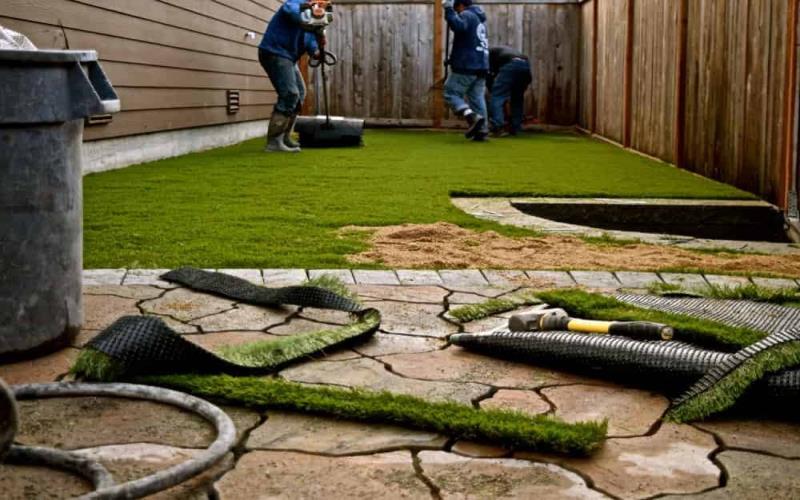
Synthetic turf is a viable substitute for natural lawns. It stays green all year round and does not fade, wither, or die because of bad weather or the climate. It’s heavy-duty and can withstand a lot of foot traffic. Professionals can help you to install the turf. Here are things that go under artificial turf.
Base Layer
The most frequently used base for artificial turf is crushed stone, which consists mostly of angular stones. Decomposed granite can also be used to stabilize the site, which will help create proper drainage of the turf. The installer puts another layer of small stone above the crushed stone to encourage good drainage. For low-cost projects, the installer may use RCA as an environmentally sustainable base material. In some lawns, a layer of soil, compacted in place, could be sufficient to form a base.
Geotextile Fabric
Geotextile fabric consists of fibers that are woven together. The incorporation of these materials comes in handy for soil separation and reinforcement. Non-woven geotextiles are constructed by linking the fibers together. These fabrics are useful because of their ability to filter and drain water. When they are heat-bonded, they form a smooth surface that is most suitable for separation and filtration applications. Needle-punched geotextiles consist of mechanically bonded fibers, possess high permeability, and can prevent soil erosion.
Weed membranes can also be useful, as it can prevent weeds from growing underneath the artificial grass. Many weed barriers are designed so water can filter through, making it useful for creating good drainage. It can also prevent soil erosion and shifting, providing a solid base.
Shock Pad or Foam Underlay
Closed-cell polyethylene foam is common because it provides impact absorption and is durable. Recycled rubber shock pads offer the best impact absorption and are eco-friendly compared to regular rubber pads. Polyurethane foam underlays provide excellent cushioning, which makes it ideal for sports facilities and a softer surface touch. For performance and comfort, some installations use layers of foam and rubber for added benefit. Newer alternatives of shock pads are biodegradable and made mostly of plant-based materials for environmentally conscious consumers. Underlay is selected based on its purpose of use, climate conditions, or cost constraint issues.
Infill Material
One popular and relatively inexpensive material is silica sand, which adds stability and heft to the turf. Another type of ground surface material is crumb rubber, which is a recycled rubberized tire with good impact attenuation features ideal for sports fields. Some organic materials like cork or coconut husks have natural air conditioning advantages. Some recent additions to the list are zeolite infills for the management of odor and thermoplastic elastomers for added performance and safety.
Installing Artificial Turf
Artificial turf provides a uniform ground for most activities, such as football and football soccer. It creates a lawn-like appearance but does not require irrigation in arid regions. People who own pets use artificial grass as well, because it is very sturdy and easy to clean. Contact a company that installs artificial grass for you.