

Automatic Bollards: A Smart Solution for Modern Vehicle Access Control
Controlling vehicle access has become an important part of security planning for public spaces, commercial properties, industrial facilities and private areas. Among the technologies available today, automatic bollards offer an effective combination of physical protection, controlled access and ease of operation.
Unlike fixed barriers, automatic bollards can be raised or lowered according to the specific access requirements of a site. This makes them particularly useful in locations where authorized vehicles need regular access while unauthorized traffic must be restricted.
What Are Automatic Bollards?
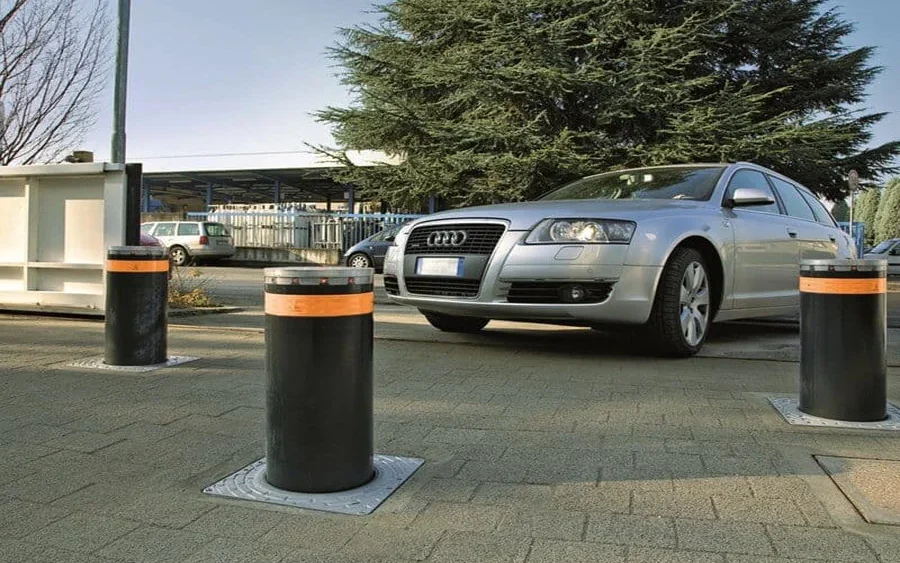
Automatic bollards are vertical security posts designed to control vehicle access. They are installed directly into the ground and can move between a raised position, which blocks vehicles, and a lowered position, which allows authorized traffic to pass.
Their operation is generally controlled through an automated mechanism and can be integrated with different access control technologies. Depending on the application, users may operate the system through remote controls, keypads, identification systems or other electronic devices.
When the bollards are lowered, the entrance remains open and accessible. When they are raised, they create a physical barrier across the access point.
Why Choose Automatic Bollards?
One of the main advantages of automatic bollards is their ability to combine security with convenience.
A fixed bollard can permanently prevent vehicles from entering a specific area, but it does not provide flexible access. Automatic models, on the other hand, allow authorized vehicles to pass without requiring personnel to manually remove or reposition a physical barrier.
This makes them particularly suitable for entrances that experience frequent vehicle movements throughout the day.
Automatic bollards can also contribute to a cleaner architectural environment. When lowered, they can leave the entrance relatively unobstructed, which is particularly useful in pedestrian areas, commercial properties and modern urban spaces.
Common Applications
Automatic bollards can be used in a wide range of environments where vehicle access needs to be controlled.
Typical applications include:
- Pedestrian zones
- City centers and public spaces
- Commercial and corporate buildings
- Residential properties
- Hotels and private facilities
- Industrial sites
- Government buildings
- Restricted parking areas
- Sensitive infrastructures
In urban environments, they can help separate pedestrian areas from vehicle traffic while still allowing authorized vehicles, such as emergency or service vehicles, to enter when necessary.
Integrating Bollards with Access Control
Modern access management is increasingly based on integrated systems rather than individual security devices. Automatic bollards can be connected to technologies designed to identify and authorize vehicles before allowing them to pass.
For example, a system can be combined with RFID readers, license plate recognition, access cards, remote controls or other identification technologies.
This allows organizations to establish different access permissions according to users, vehicles, schedules or specific security policies.
Integration can also simplify the management of multiple entrances, particularly in larger facilities where vehicle movements need to be monitored and controlled systematically.
Security and Physical Protection
The level of protection provided by automatic bollards depends on their construction, dimensions, materials and intended application.
Some models are primarily designed for traffic management, while reinforced security bollards can be used in environments where protection against unauthorized vehicle intrusion is a major concern.
For high-security applications, it is important to select a system designed according to the specific requirements of the site. Factors such as vehicle type, potential impact risks and the overall security strategy should be evaluated before installation.
Materials and Outdoor Durability
Because automatic bollards are generally installed outdoors, resistance to environmental conditions is an important consideration.
Steel is commonly used for security bollards because of its strength and durability. Protective treatments can help reduce the effects of corrosion caused by rain, humidity and other environmental factors.
The external finish can also influence how effectively the bollards integrate with their surroundings. Depending on the project, different finishes, colors or reflective elements may be appropriate.
Installation Considerations
Installing automatic bollards requires careful planning. The characteristics of the entrance, road width, underground infrastructure and available installation depth should all be assessed before work begins.
Electrical connections and drainage can also be important considerations, particularly for systems installed outdoors and in areas exposed to rainwater.
The frequency of use should be evaluated as well. A busy entrance with constant vehicle movements may require a system designed specifically for intensive operation.
Professional installation is therefore essential to ensure that the bollards operate correctly and safely over the long term.
Automatic Bollards and Other Security Systems
Automatic bollards are often most effective when combined with other vehicle security technologies.
Depending on the requirements of a facility, they can work alongside automatic barriers, road blockers, tyre killers, access control systems and traffic lights.
This layered approach can provide different levels of control. For example, a barrier can manage everyday vehicle traffic, while reinforced bollards can provide additional physical protection at particularly sensitive access points.
The combination of several technologies allows security systems to be adapted to the specific characteristics and risks of each location.
How to Choose the Right Automatic Bollards
There is no single solution suitable for every installation. Before selecting automatic bollards, it is important to consider the required security level, traffic frequency, available space and access control requirements.
The dimensions of the bollards, operating speed, construction materials and emergency release mechanisms can also influence the choice.
Maintenance requirements should not be overlooked. A reliable system needs to remain operational under the environmental and traffic conditions of the installation site, making long-term serviceability an important part of the decision-making process.
A Flexible Approach to Vehicle Access
Automatic bollards provide an effective way to combine physical vehicle protection with flexible access management. They can prevent unauthorized vehicles from entering restricted areas while allowing authorized traffic to pass quickly and efficiently.
From pedestrian zones and commercial properties to industrial and high-security facilities, their versatility makes them suitable for many different applications.
With appropriate planning, professional installation and integration with complementary security technologies, automatic bollards can become an important component of a modern vehicle access control strategy.