Future-Ready Facilities: Strategic Tech Concerns for the Next Decade

To keep pace with the growing demand for future-ready commercial offices, architects, contractors, and FMs must change how buildings are designed, built, and maintained. Previously, “future-ready” meant the spaces could be easily resized to meet changing tenant needs for square footage. According to a recent IFMA article1, “The office is no longer defined by physical walls — it is a flexible ecosystem that blends technology, human experience and organizational goals. Facility managers who embrace this shift will lead the way in creating workspaces that not only adapt to change but actively drive business success.”
Today, a future-ready commercial space must also prioritize sustainability through energy-efficient systems and green certifications, as well as technology integration with smart sensors and AI tools for data-driven insights. Additionally, future-ready facilities should address changing workforce needs, including hybrid work models and enhanced employee well-being features such as biophilic design, health amenities, and improved air quality.
Six Strategic Tech Concerns for Future-Ready Commercial Spaces
While the project specifics will vary by tenant’s industry and workforce, most commercial and industrial spaces share the same six technology concerns.
Artificial Intelligence (AI) and Internet of Things (IoT) Integration can be used by facility teams to enable smart building automation, predictive maintenance, and efficient energy management, improving occupant comfort and safety, and reducing carbon footprints.
Architects and designers should address sustainability and energy concerns through energy-efficient systems such as smart lighting and HVAC, improved insulation, and water and waste management to reduce environmental impact and operational costs. Renewable energy sources such as solar and wind can help reduce dependence on the local power grid and its limitations.
Data and Analytics should include cloud-based systems for centralized data management to break down organizational silos and enable data-driven decision-making for maintenance, resource allocation, and operational efficiency.
Resilience and Risk Management strategies should identify and mitigate risks from environmental threats and technological disruptions, embedding resilience into both daily operations and long-term planning.
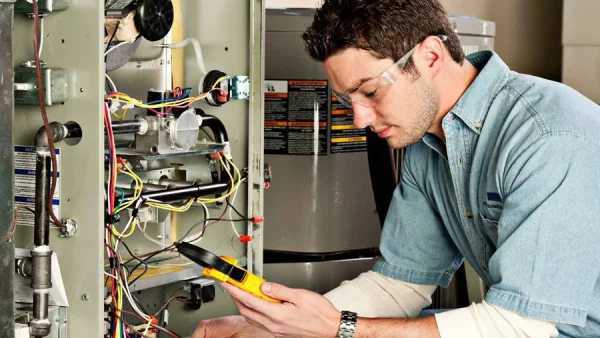
Proactive and Predictive Maintenance plans enable FM teams to shift from reactive to proactive maintenance by leveraging data analytics to predict potential equipment failures, schedule maintenance in advance, and reduce costly emergency repairs and downtime.
Privacy and Governance policies must address the data privacy challenges arising from increased technology integration and develop balanced regulatory frameworks for emerging technologies.
Future-Ready Facility Solutions
When creating a future-ready space, the design and components must be flexible and adaptable enough to meet a wide variety of tenant needs today while simplifying moves, adds, and changes (MACs) in the future. Some of the most common solutions include.
- Doors and windows
- Modular cabinets and workstations
- Demountable partition systems
- Variable Air Volume (VAV) units for heating and air conditioning
These products can be easily removed and reinstalled as the tenant’s square footage needs change over time. Thanks to digital transformation and the widespread adoption of Artificial Intelligence (AI) platforms and services, future-ready spaces should also include an integrated data cable management system that provides quick, easy access for future MAC projects or for complete reconfiguration. To address these changing data needs, many designers and facility teams have moved on from hidden cable trays above the ceiling to low-profile raised flooring systems.
Low-Profile Raised Flooring Systems
These systems, like the Gridd® Adaptive Cabling Distribution® System, use modular steel assemblies to create a new airspace above the existing slab. Contractors or FM teams relocate the Ethernet cables from above the ceiling into the raised access flooring system. Once a MAC is approved, facility team members remove the modular floor covering — typically carpet tiles — to quickly access any cables or connection points within the space. By eliminating the need for ceiling access, facility teams can reduce future cabling costs across the building’s lifecycle.
Technical Benefits
Gridd is 100% backward-compatible, so today’s components will work with systems installed 30years ago or 30 years from now. Made from 100% US Steel, Gridd can handle loads ranging from 100 PSF to 650 PSF, making it the ideal solution for any commercial project, from a typical office to an industrial manufacturing plant.
Unlike other systems that utilize plastic components, the Gridd system complies with the intent of the provisions of the following codes and regulations certified by an IAPMO UES Evaluation:
- 2021, 2018, 2015, 2012, and 2009 International Building Code® (IBC)
- 2013 Abu Dhabi International Building Code (ADIBC)
- 2023 City of Los Angeles Building Code (LABC)
- 2022 California Building Code (CBC)
- Gridd is also GreenSpec-listed and a BuildingGreen-approved product
With its low-profile design, there is minimal impact on ceiling heights, which means Gridd performs equally well for new construction, historical, retrofit, and remodeling projects. Since the system requires no special fasteners or tools, its quick installation time also makes it ideal for occupied remodeling projects.
Gridd addresses future-readiness by making any commercial space ready for increased Power over Ethernet (PoE) draw and fiber-optic integration. The cable capacity of Gridd40 is 45 Cat6 or 19 Cat6A cables at 40% capacity. The cable capacity for Gridd70 is 86 Cat6 or 38 Cat6A cables at 40% capacity.
Future-Ready Facility Examples
Gridd is the flexible, adaptable data cabling solution for virtually any size or type of commercial project.
Museums
Emergency Operations
Entertainment and Retail
When selecting a raised access floor to address future-ready needs, architects, designers, and FM teams must consider potential tenant cable requirements over the next 10-20 years to determine the appropriate floor height. Future flexibility and construction cost savings should be prioritized over initial installation costs to determine ROI for the property owner or tenant properly. Raised flooring + modular design = future-ready facilities and reduced construction and maintenance costs. To learn more, please contact a Gridd Advisor.