

Maximizing Space and Value with a Loft Conversion
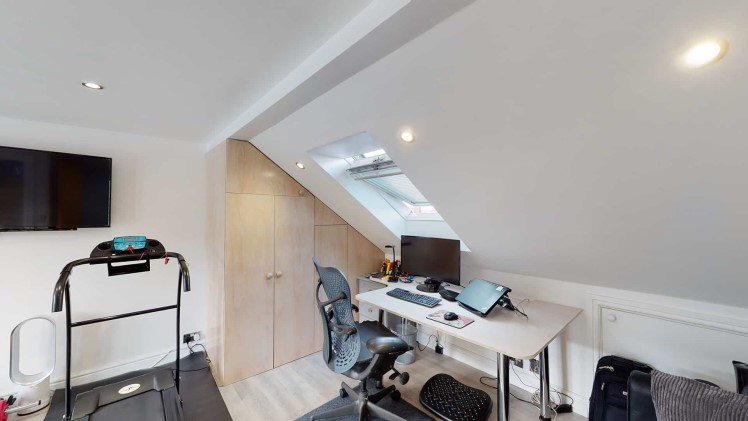
Loft conversion is one of the most common home improvement projects that will allow you to utilize the unused area of your house and increase the value of your property. It can also be relatively cheap if you want to add an additional bedroom, a home office or simply a living space in the form of a converted loft. Below are all the important aspects about Loft conversions that you ought to know.
1. Why Consider a Loft Conversion?
Some of the top benefits of using loft conversion to solve the need for additional space without necessarily going for a house addition. What is more, instead of acquiring a new piece of property, a loft conversion gives one the ability to activate the existing space, which many times is not used. Also, it has indicated that loft conversions offer you the benefit of adding value on your home hence providing a worthy investment for the future.
2. Types of Loft Conversions
There are several types of loft conversions, each suited to different types of properties and budgets:
Dormer Loft Conversion: A dormer is an extension pulled out from the face of the slope of the roof, intended to provide extra headroom and a floor area. Dormers are probably one of the most popular kinds of loft conversions and excellent for nearly all properties.
Hip-to-Gable Loft Conversion: This type of conversion entails adjustment of the curved side of the roof to form a vertical wall referred to as the gable. This method suits semi detached and detached houses with hipped roof very well.
Mansard Loft Conversion: A mansard conversion changes the inclination of the roof in such a way that it produced a flat roof …this makes the maximum use of space, ability is greater and may often need planning permission but is worth it since it increases the usable space significantly.
Velux Loft Conversion: It is also known as rooflight conversion and is the simplest and cheapest of the two you can undertake. Velux windows are installed with actual little change to the form of the roof so that it is less intrusive.
3. Town and Country Planning and the Building Act
Loft conversions are normally considered permitted development and are therefore do not require planning permission although this will vary in respect of the size and type of conversion. But planning permission is required to make sure that conversion is sound, conforms to fire regulation or not, and is well insulated or not. In each case you should contact your local council for permission before you start any construction.
5. Designing Your Loft Space
This brings the need to consider functionality of your loft conversion before and during the process of construction. Regardless, of the room type be it the bedroom, study or play room, the design should be sensible and best utilize the light as well as the space. There might be some issues that you will have to consider concerning placement of windows, doors, as well as staircases. Getting a professional either in form of an architect or specialist in loft conversion will inevitably lead to a better design that meets the client’s needs. Contact LMB Group for more information.
6. Benefits of a Loft Conversion
Increased Living Space: A loft conversion is an added bonus to your house as it creates another room or two especially for families or those working from home.
Adding Value: Loft conversion can add as much as 20% of the original price of the house, thus it is a wise decision to make.
Energy Efficiency: When converting a loft, earthing and insulating are essential steps to enhance your home’s energy efficiency, and hence reduce on heating costs.
Personalized Space: Loft conversion provides a client with a chance to design the new living area in compliance with all the requirements and style he/she has in mind.
7. Is Your Loft Suitable for Conversion?
Not all lofts can be converted, therefore it is important that one looks at their loft before going for the conversion. A key factor is head height, in an ideal world, you should be able to produce at least 2.2 meters from floor to ceiling. Aside from location, other factors that need to be considered includes, the pitch of the roof type of house, ability to accommodate a staircase at the location. You should consult a professional loft conversion firm in order to establish as to whether your loft is convertible or not.
A loft conversion is among the most effective solutions regarding increasing the amount of usable square meters in your dwelling and its overall value. Whether it’s about creating a new bedroom, an office, a playroom or any other space, a proper conversion of the room offers you what you need and enhance the standard of living of your home. Always engage the services of competent personnel, devote ample time in developing a clear schedule, and conform to the existing laws on construction in order to have a stress free project.